A successful Albanian rental journey depends less on covering the most distance than on choosing suitable roads and leaving time for the practical stages. Review the route, the final approach to accommodation and the conditions of your vehicle before departure. The broader car rental Albania guide helps organise the booking; this guide concentrates on using the car responsibly once the journey begins. It combines current provider restrictions with practical planning, while leaving legal eligibility, road signs and any exceptional permissions to the relevant authorities and the agreement for your booking.
Check the driver and documents before comparing routes
Confirm that every intended driver meets the selected vehicle's requirements. Age and driving experience conditions can vary by offer, so a general destination statement should not replace the individual terms. Present the required original physical documents at collection. A photograph stored on a phone should not be assumed equivalent to the driving licence itself.
Licence recognition depends on the document and the traveller's circumstances. Check the relevant official guidance and ask the supplier what it requires for your licence, including any translation or international driving permit. The UK Foreign Office gives advice specifically for UK travellers; it should not be treated as a universal answer for licences issued elsewhere.
If someone else may take over during the trip, include that person under the agreement before they drive. Long journeys and difficult manoeuvres are easier to plan when the authorised drivers are clear. Do not wait until the main driver is exhausted to discover that a companion has not been added.
Distinguish public road access from rental permission
Localrent's Albania terms limit rental use to paved public roads and identify additional prohibited routes and regions. A road may appear on a map or be used by local traffic without being permitted for your rental. Conversely, a tourism recommendation describes a place to visit, not a contractual approval for the approach you choose.
Review restrictions before building the itinerary around a mountain excursion or remote beach. Vehicle size does not change the rule: an SUV is not a permission document. Optional protection should also not be assumed to cover use that the agreement prohibits. If a route is excluded, choose another route or separate transport.
Ask the supplier a precise question when uncertain. Include the starting point, destination and proposed intermediate road or meeting location. A general question about whether Albania is suitable for driving is too broad to settle a particular approach. Save a relevant written answer, and still respond to current signs, closures and road conditions on the day.
Recognise the named routes that need particular care
The provider's prohibited-route guidance names Berat to Permet through Osumi Canyon and SH74, Memaliaj to Berat through Martallozi, Tirana towards Qafe Shtame through Lake Bovilla, Kruje to Burreli through Qafe Shtame, and the mountain connection between Thethi and Valbona. Check the original guidance when planning any of these areas rather than relying on a shortened itinerary description.
It also names restricted regions including Tomorri Mountain National Park, Lura National Park, Lake Koman, Korab Mountain and Qafe Shtame Nature Park. The list is not an invitation to use every unnamed minor road: the paved-public-road condition still applies. An unpaved shortcut remains unsuitable even if it has not been singled out by name.
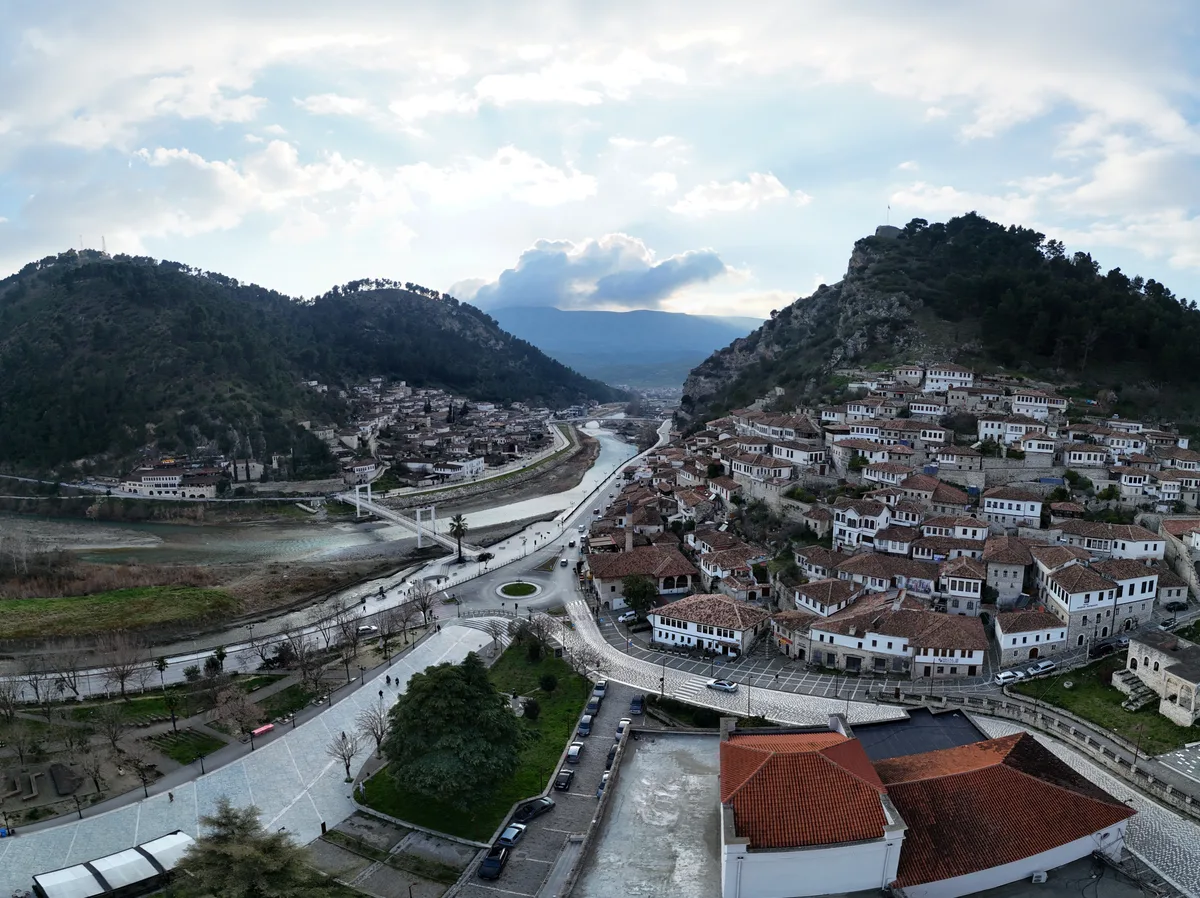
For a route involving Berat, use the Berat rental planning guide alongside the provider's detailed road guidance. Where the provider suggests an alternative connection, check the complete route and current conditions rather than assuming every detour from it is approved. A longer appropriate route can be the necessary basis of the itinerary.
Review navigation before and during the journey
Inspect the route overview while stationary. Look at intermediate towns and any unusual shortcut, crossing or abrupt change from a main road to a minor route. Save enough information for use when connectivity is poor, but remember that an offline map cannot provide every current closure or change. Use it as a navigation aid, not as proof of road suitability.
If the app recalculates after a missed turn, assess the new route before following it onto an unfamiliar surface. Stop somewhere safe when necessary. It is better to lose a few minutes reviewing the route than to continue into a section that becomes difficult to leave. Avoid letting the shortest-time setting make the decision for you.
Ask a passenger to help with route review if available, while keeping the driver's attention on the road. Do not read long messages or change complex settings while moving. If travelling alone, plan suitable stopping places for checks. Navigation is useful precisely when it reduces workload, not when it creates a second task competing with driving.
Choose stops where the car can be left fully clear of moving traffic. A scenic view is not a reason to stop on a blind bend or obstruct a narrow road. Let a passenger take photographs only where doing so does not distract the driver.
Give the first and final kilometres their own attention
The main road between towns may be the simple part of a journey. The final approach to a guesthouse, beach or meeting point can involve tighter space and more decisions. Obtain arrival instructions from the host before leaving. Ask where the car can legally stop and whether the actual entrance differs from the map pin.
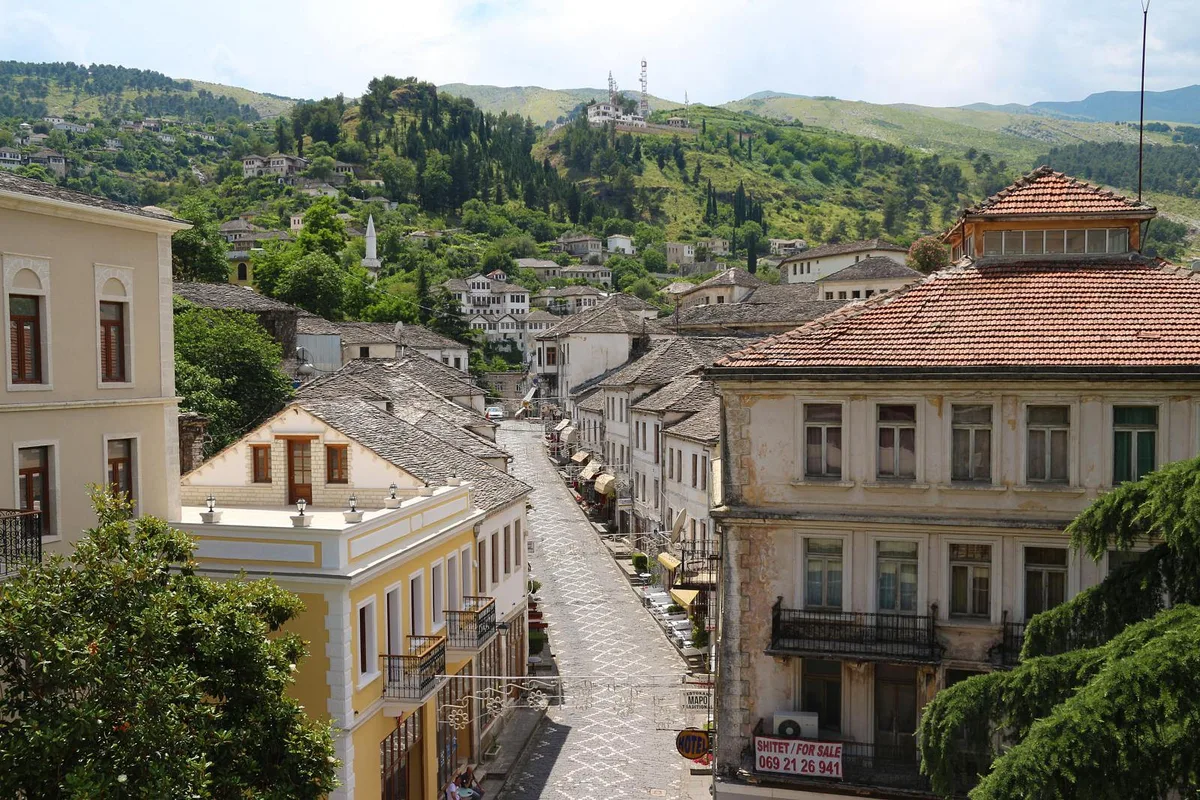
Our Gjirokaster arrival guide shows why parking and luggage deserve advance planning in a steep historic setting. Do not drive into a narrow street solely because navigation says the room is at the end. A nearby agreed unloading point may be much more practical for everyone.
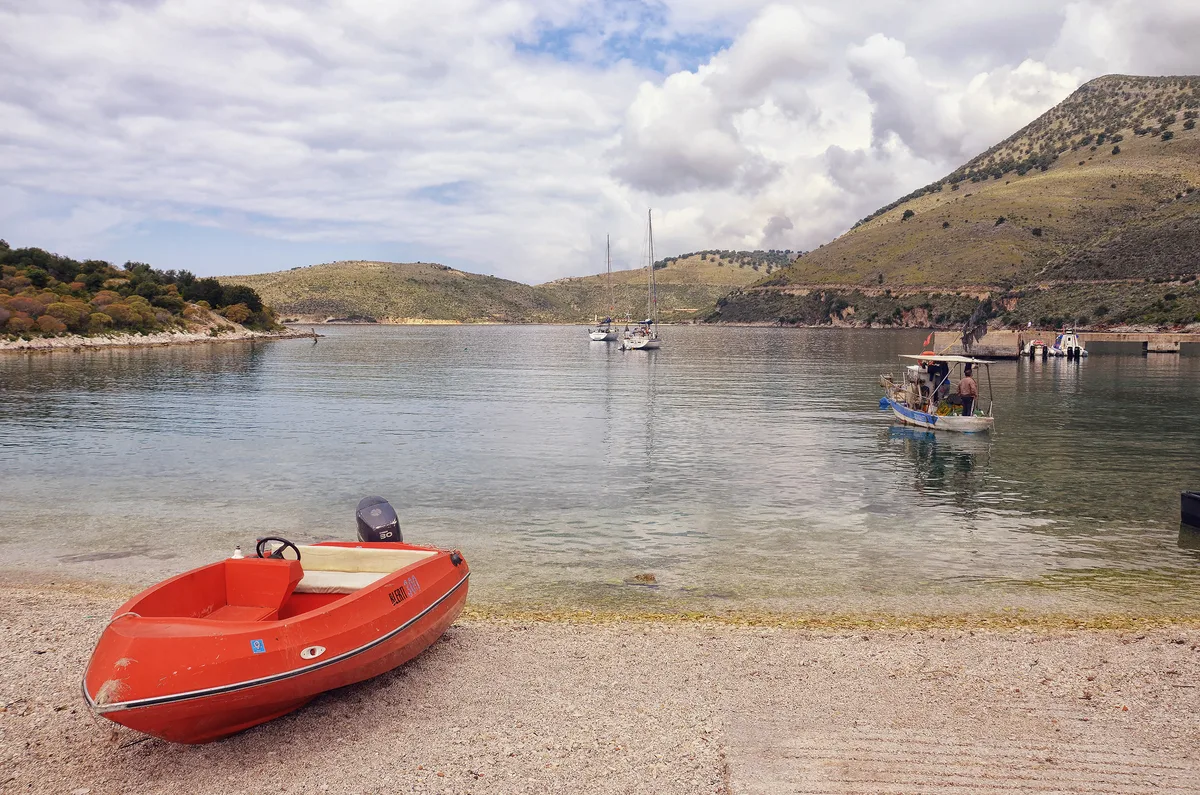
Beach access needs the same scrutiny. The provider prohibits unpaved exits to beaches. If legal parking and a walk are feasible, prepare for that; otherwise choose another outing or suitable transport. A row of cars near the water does not establish that their approach is allowed for your booking.
Plan around daylight and driver energy
The UK Foreign Office warns about road-surface issues and hazards that can be harder to identify at night, including unlit vehicles and roadworks. Use that as a reason to plan unfamiliar sections conservatively, not as a prediction that every journey will be difficult. A rested driver and an unhurried schedule are valuable regardless of the road.
Break a longer travel day into manageable stages. Include a meal, comfort stops and the time needed to find parking. A navigation estimate usually describes movement between points, not the entire experience of travelling with people and bags. If your planned day has no margin for a missed turn or a rest, it needs revising.
Weather can also change the sensible plan. Check current conditions and heed official warnings or closures. Do not replace a closed route with an unknown mountain shortcut just to preserve a reservation. Contact the accommodation or activity provider and adjust the schedule. A rental gives flexibility only if you allow yourself to use it.
Prepare the vehicle rather than learning everything in traffic
At collection, inspect the tyres, glass, bodywork and interior with the representative. Ensure existing marks are recorded and photograph the fuel reading and relevant dashboard information. Raise warning lights or safety concerns before departure. Keep the condition record together with the agreement so that the starting point is clear.
Locate lights, wipers, hazard lights, the parking brake, reverse gear and the fuel release. Adjust the driving position and mirrors. Ask about any feature you do not understand, particularly in an unfamiliar automatic or a car with different controls from your own. Do not assume a driver-assistance feature makes a manoeuvre safe without your judgement.
Secure luggage and keep necessary equipment accessible. Confirm that child seats requested through the booking are present and suitable for the intended use, then check installation before setting off. Avoid loose items that could move around the cabin. A careful departure reduces distractions throughout the first driving stage.
Use parking decisions to simplify the day
For a city or historic-town visit, consider parking once and walking between the places you want to see. Check signs, duration restrictions and payment instructions at the actual location. Do not assume an unmarked space is free for any length of time or that another vehicle's presence proves you may park there.
In Tirana, accommodation parking and city sightseeing should be planned together. The Tirana car rental guide compares keeping a car during the stay with collecting when leaving. In other towns, ask hosts about the final approach and whether a space is genuinely reserved or merely nearby.
When leaving the car, remove valuables from view and take important documents with you where appropriate. If the vehicle is loaded between hotels, think about luggage before choosing sightseeing stops. Opening a full boot in a busy area and then walking away may reveal belongings you intended to keep discreet. Pack the day's essentials separately.
Refuel according to the agreement and the vehicle
Ask the supplier to identify the correct fuel at handover and check the vehicle's own label before filling. If uncertain, stop and clarify rather than relying on a guess from the model name. Keep the receipt and note the starting fuel level so that the return requirement is understandable.
Plan refuelling before a tightly timed return rather than leaving it until the last approach. A station that appears convenient on a map may require a detour or be unsuitable for the direction of travel. Include the stop in the schedule and retain enough margin to use another option if needed.
Follow the booking's fuel policy. Localrent's Albania terms describe returning the same level, with consequences for a shortfall and no refund for surplus under those terms. Avoid trying to estimate an exact last drop while driving. The practical goal is to return with the agreed level and clear evidence, not to turn refuelling into the most stressful task of departure day.
Respond to incidents through the agreed process
If there is a collision or another incident, prioritise immediate safety and contact emergency services when necessary. Notify the supplier and follow the required reporting process. Ask at collection what documents are needed, including police documentation where applicable. Do not assume a minor-looking mark can be ignored until return.
Record relevant facts and photographs only when safe. Avoid private repair arrangements or commitments to another party without the supplier's guidance. Keep copies of communications and reports. The conditions for cover can depend on how the incident is handled, not just on whether you selected an insurance option.
For a breakdown, describe your location and the symptoms accurately. Do not continue driving a vehicle that appears unsafe or risks further damage. Follow the authorised assistance instructions and clarify any proposed towing or replacement arrangement. Vrenty Car is an information website; the supplier's operational contact is the appropriate starting point for the vehicle itself.
Keep borders, ferries and the final return explicit
Travel outside Albania requires advance discussion with the rental company about the countries, documents, cover and charges. Taking the vehicle onto a ferry is another question to confirm. A road border approval should not be treated as automatic ferry permission, and a passenger ticket does not establish that a sailing accepts your vehicle.
If the journey ends at TIA, the airport return guide helps separate the drive, refuelling, inspection and reaching departures. For a city or ferry return, use the same principle: complete the rental at the agreed place before the next transport deadline. Never improvise an unattended return because time has run short.
A sensible driving plan has room for the real work around the road: rest, parking, luggage and handovers. Choose fewer stops when necessary and keep the route within the agreement. The reward is not simply reaching the destination; it is arriving with enough time and energy to enjoy it.
Questions & answers
Can I drive on any road shown by a navigation app?
No. Check road conditions and the rental restrictions independently. A calculated route can include an unpaved or specifically prohibited section.
Does an SUV permit unpaved roads?
No. The vehicle category does not override the agreement. Localrent's Albania terms require paved public roads and also identify prohibited routes and regions.
Should I plan unfamiliar sections after dark?
Consider a daylight alternative, particularly after a tiring arrival or on minor roads. Check current conditions and leave enough margin to stop or change the overnight plan rather than press on while uncomfortable.
Can I cross into another country?
Only after confirming the specific trip with the rental supplier and obtaining the required approval and documents. Check cover, charges and any ferry element separately.
What should I do if the road ahead becomes unpaved?
Do not continue simply because the app directs you onward. Stop or turn around where safe, review an allowed alternative and contact the supplier when clarification is needed.